5Ks and Schools


Frequently asked questions:
Can Sikh children wear hats over their turbans?
Due to its definitive importance and significant religious ideals, the Dastaar is tied layer by layer and is not put on or taken off like a hat. The Dastaar is a respectful part of the Sikh identity and to ask for it to be removed can be perceived as being disrespectful and demeaning. For most Sikhs it is also considered disrespectful to place a hat over the Dastaar or cover the Dastaar in any way. To do so would be to hide the very distinct identity and values it represents.
Like all religions, adherents to the Sikh faith have a spectrum of beliefs. Sikhs beleive is complete equality between adherants and non-adherants of the faith. Accordingly, practicing Sikhs do not persecute or malign the beliefs of non-practising Sikhs. While some Sikhs may be happy to cover their turban with a hat others may strongly oppose this practice.
Best practice would include a conversation between educators and parents of the Sikh child as well as getting an understanding of the views of the Sikh child.
What do Sikh students do with their long hair when they have to attend swimming classes?
Some Sikh students will wear a swimming cap over their turban during school swimming lessons. Some Sikh students may wear their turban without a swimming cap. Some Sikh students may swim without a turban altogether. This choice is within the parameters of their faith and their choice should not be judged against other Sikh student practices. Widest possible accomodation of these scenarios should be afforded.
What should schools consider when a non-practising Sikh is transitioning to become a practising Sikh?
An educator may notice the following changes in their Sikh student:
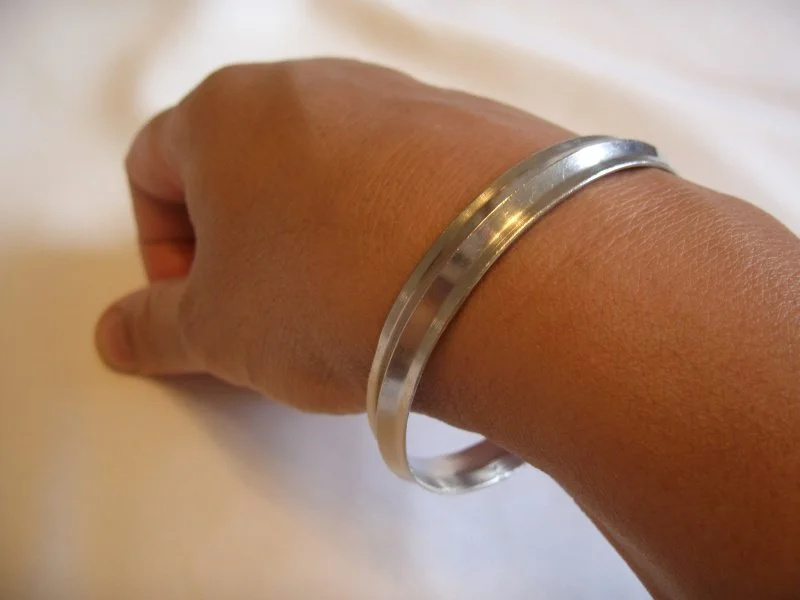
The wearing of a Kara on the child’s predominant wrist where previously there was none.
Long hair on the head where previously there was cut / short hair.
Hair being tied up in a bun / top knot. A small head covering akin to a bandanna may also be considered where the hair is too short for a full turban.
A turban being tied around the head where previously there was no head covering.
Best practice would include ensuring a respectful conversation is had with the child and parents to better understand the changes. Transitions to practising Sikhi should be met with positive energy and not looked at as a burden. The child is likely to be excited to be doing something to display their faith on their body.